
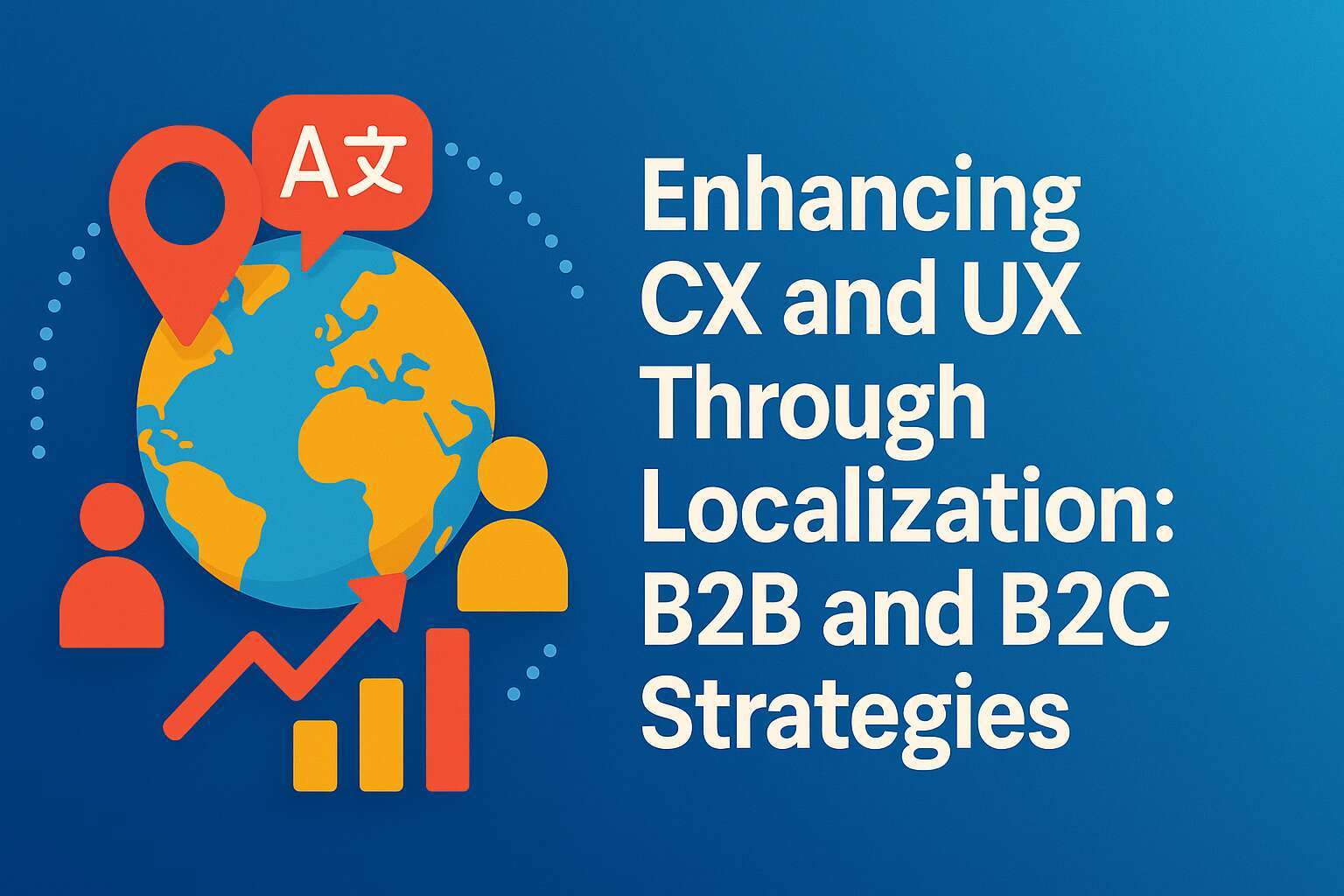
In the digital-first era, Customer Experience (CX) and User Experience (UX) are decisive for business success. Whether you operate in B2B or B2C markets, your ability to connect with customers globally depends on how well you adapt to their language, culture, and expectations.
Localization is no longer a “nice to have”—it’s a strategic imperative. Companies that invest in culturally sensitive translations and tailored content not only increase engagement but also build stronger brand loyalty.
In this article, we explore effective B2B and B2C localization strategies, show how technology supports this process, and explain why measuring localization impact is crucial. Finally, we’ll see why working with specialized partners like InnovaLang’s Website and Social Media Translation Services can help businesses deliver consistent, culturally relevant experiences.
- Why Localization is Key to Enhancing CX
Localization goes beyond language translation—it’s about cultural adaptation. Tailoring your content, product descriptions, and marketing campaigns to the cultural preferences of each region makes customers feel understood and valued.
In B2B, this could mean adapting technical white papers or proposals to reflect local business etiquette and terminology, strengthening trust with international partners. In B2C, localized e-commerce websites, product descriptions, and multilingual customer service can transform a one-time visitor into a loyal customer.
For example, Amazon’s success in global markets comes partly from its localized UX, which includes region-specific product recommendations, payment methods, and customer support.
- B2B Strategies for Effective Localization
B2B companies often deal with high-value partnerships where credibility and professionalism are crucial. Here are key strategies:
✔ Localized marketing materials – Translate not just words but also adapt visual elements, case studies, and white papers to fit local industry standards.
✔ Collaborate with local experts – Partner with regional agencies or consultants who understand the local market’s communication style.
✔ Use technology to speed up processes – AI-assisted tools and Translation Management Systems (TMS) help maintain terminology consistency while reducing time to market.
✔ Continuous market research – Regularly monitor local trends and adapt messaging accordingly.
For instance, a tech company entering Japan might adapt its marketing tone to align with formal Japanese business communication, ensuring respect and professionalism.
- B2C Strategies: Speaking the Customer’s Language
For B2C brands, localization directly impacts emotions and buying behavior. Consumers expect brands to understand their preferences and cultural values.
Key strategies include:
✔ Multilingual websites and apps – Not just translated, but optimized for local shopping habits, including currencies, units of measurement, and delivery options.
✔ Localized social media and email campaigns – Use platforms and languages preferred by local users, ensuring content resonates emotionally.
✔ Personalized recommendations – Leverage localized AI algorithms to suggest products based on local trends and browsing behavior.
✔ Multilingual customer service – Offering support in the customer’s native language improves trust and encourages repeat purchases.
For example, a fashion retailer targeting Spanish-speaking markets could provide dedicated Spanish websites, local influencers for campaigns, and customer care in Spanish.
- Improving Digital CX and UX Through Localization
A strong digital consumer experience depends on seamless, intuitive interaction:
- Mobile-optimized websites – Responsive design and clear navigation are crucial for global mobile-first markets.
- Multiple payment options – Local payment preferences (PayPal, Klarna, or Alipay) build trust.
- Personalized UX – Use localized data analytics to recommend products or content based on local behavior.
- Engagement on social platforms – Create culturally relevant conversations to foster community and loyalty.
When customers feel the website “speaks their language” in both words and design, their likelihood of purchasing increases significantly.
- The Role of Technology in Localization
Technology enables real-time adaptation and scalability:
✔ AI-powered translation and chatbots – Provide instant multilingual customer support.
✔ Data analytics – Track regional CX metrics, such as conversion rates and customer satisfaction, to adjust strategies.
✔ Automation tools – Manage large volumes of content while keeping consistency across languages.
However, while technology is powerful, it cannot replace human cultural expertise. Machine translation might handle basic text, but for marketing copy or brand messaging, professional translators remain essential.
- Measuring Localization’s Impact on CX
You can’t improve what you don’t measure. Businesses should analyze KPIs like:
- Conversion rates by region – Are localized pages outperforming generic ones?
- Customer feedback – Reviews and satisfaction surveys can reveal cultural alignment issues.
- Engagement metrics – Click-through rates on localized campaigns show how well your message resonates.
For instance, if localized product descriptions lead to higher add-to-cart rates in a specific market, you know the investment pays off.
- Why Work With Specialists
Working with professionals like InnovaLang ensures that localization goes beyond word-for-word translation. InnovaLang specializes in preserving cultural nuances in the target language, helping businesses maintain a consistent brand voice while adapting to local expectations.
This expertise is especially critical for websites and social media, where tone, style, and timing directly influence customer engagement.
Conclusion
In global markets, localization is the bridge between businesses and customers. It enhances CX and UX by making content culturally relevant, emotionally engaging, and easy to navigate.
Whether you’re building B2B partnerships or selling directly to consumers, investing in professional localization is a strategic move that drives loyalty and long-term success.
With InnovaLang’s expertise in website and social media translation, you can ensure your brand speaks the language of every customer—accurately, respectfully, and effectively.